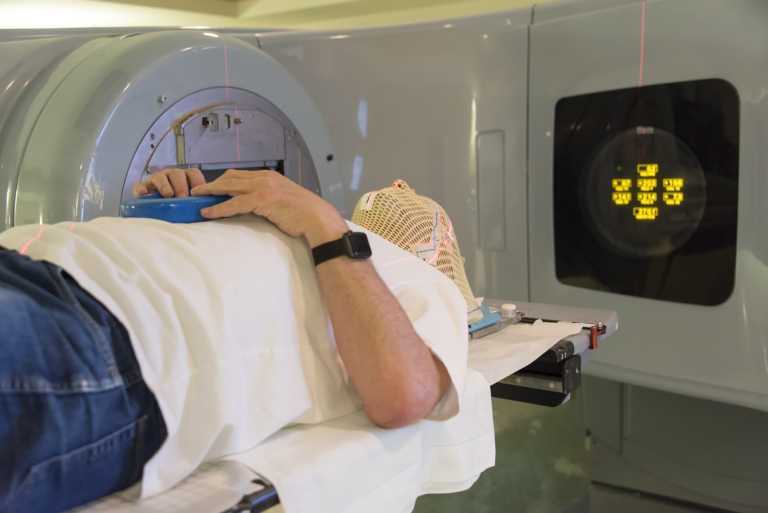
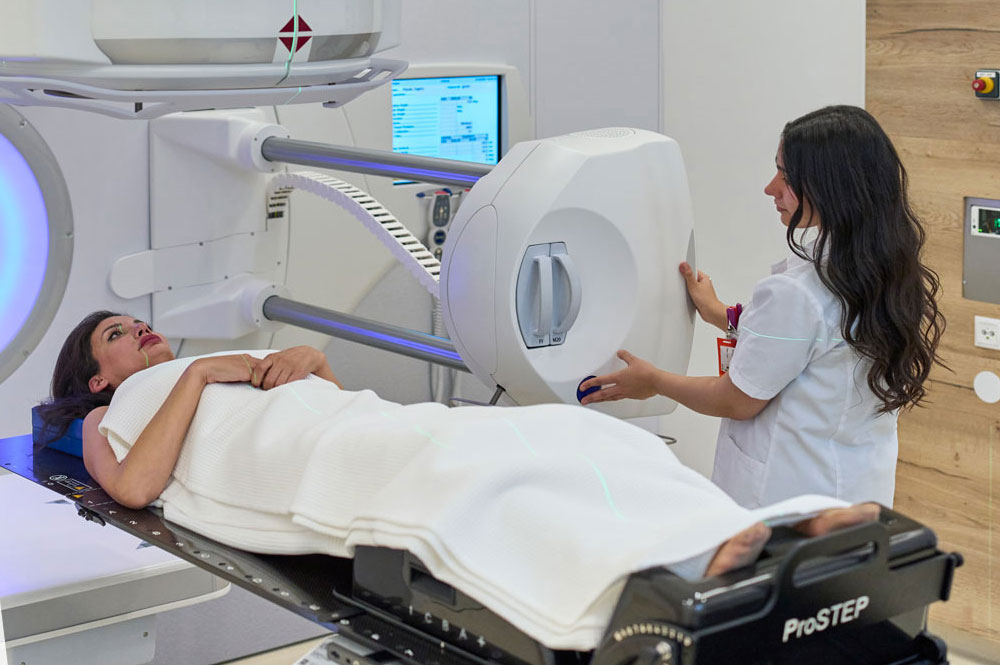
Ever since the birth of fractionated external beam radiotherapy made cancer treatment possible, there have been constant debates and examinations into how to properly dose and schedule treatment.
The goal of radiotherapy is to be unintrusive, and treatment plans are designed to maximise the effectiveness of radiation exposure in the destruction of cancer cells and tumours whilst preserving healthy tissue and minimising side effects.
Exactly how long a course is can vary depending on the recommended total dose of radiation, with courses varying from a single dose to dozens of doses taking place over several months.
Whatever the case is and your situation, we will help to guide you every step of the way through the use of advanced methodologies, state-of-the-art equipment and a holistic multidisciplinary approach to every aspect of care.
One fascinating trend that has been explored in recent years is high-dose targeted radiotherapy, which uses highly advanced linear accelerators to significantly shorten treatment times whilst minimising potential side effects.
The recent HERMES study undertaken by The Royal Marsden Cancer Charity suggests that the treatment times and treatment sessions could be potentially halved by using highly accurate LINAC systems and higher doses of radiation without affecting safety or efficacy.
To explain why, it is important to explain why radiotherapy is fractionated in the first place and the specifics of the study.
What Is Fractionated Radiotherapy?
The concept of fractionation is the division of a total dose of radiation into multiple smaller doses, sometimes as few as five but can be over 30 or more depending on the type of treatment.
The principle behind fractionation is that cancer cells are more vulnerable to radiation than healthy cells, which causes their DNA to be destroyed and for them to die faster than healthy cells.
However, radiation will kill healthy cells at a high enough dose, so the goal of fractionated radiotherapy is to give healthy cells a chance to recover from the damage done to DNA and to have fewer toxic effects on healthy cells.
Whilst the exact fractions will vary depending on the cancer, oncologist, machine and overall guidelines, a common fractionation schedule will divide the total radiation dose into 30 daily radiotherapy sessions taking place every weekday over six weeks.
Sometimes there are more smaller doses (hyperfractionation) or fewer, higher doses (hypofractionation), depending on the type of cancer, its location, its stage and other factors which require a more aggressive approach.
What Did The HERMES Study Prove About Radiotherapy?
The HERMES study was a trial to determine whether a total radiation dose could be delivered as safely in far higher fractions using accurate MRI-guided external beams.
The focus was on men with localised prostate cancer, and divided 46 volunteers into two control groups; 24 men would have a standard five-session radiotherapy treatment over 14 days, whilst the other 22 would have just two doses over eight days.
The system used was an MRI-guided LINAC machine, which allowed for precisely guided radiotherapy, and the study would determine not only the effectiveness of treatment, but how it affected bowel and urinary function, two common side effects of prostate cancer treatment.
The study found very few differences between the two treatment approaches; moderate side effects were seen roughly equally in both groups, bowel side effects were low overall, and the only difference was slightly milder bowel side effects in the higher-dose group.
Whilst limited in scope, and thus would require a much larger trial to confirm its findings, the HERMES study demonstrates the potential for higher-dose, highly accurate short-term treatments.
Why Are Fewer Doses Better In Radiation?
The biggest benefit of having fewer doses is not seen in the study, which focused on the efficacy of treatment, but on the wider context of having radiotherapy treatment.
More doses means more appointments, more travel, more hospital visits and more disruption to your everyday life. If you have travelled abroad for the best treatment possible, more doses means a longer stay in the country away from home and away from a support group that may not be able to visit all the time.
If the results of the HERMES study translate not only to a wider population but also to more cancer treatments, the benefits to quality of life are potentially astonishing, reducing the time spent being treated, removing cancers more quickly and increasing the availability of treatment for others.
The principle is similar to that used for stereotactic radiosurgery, where brain tumours can be removed in a single session thanks to highly precise and powerful doses of radiation.