
New Research Supports Radiotherapy For Keloid Prevention
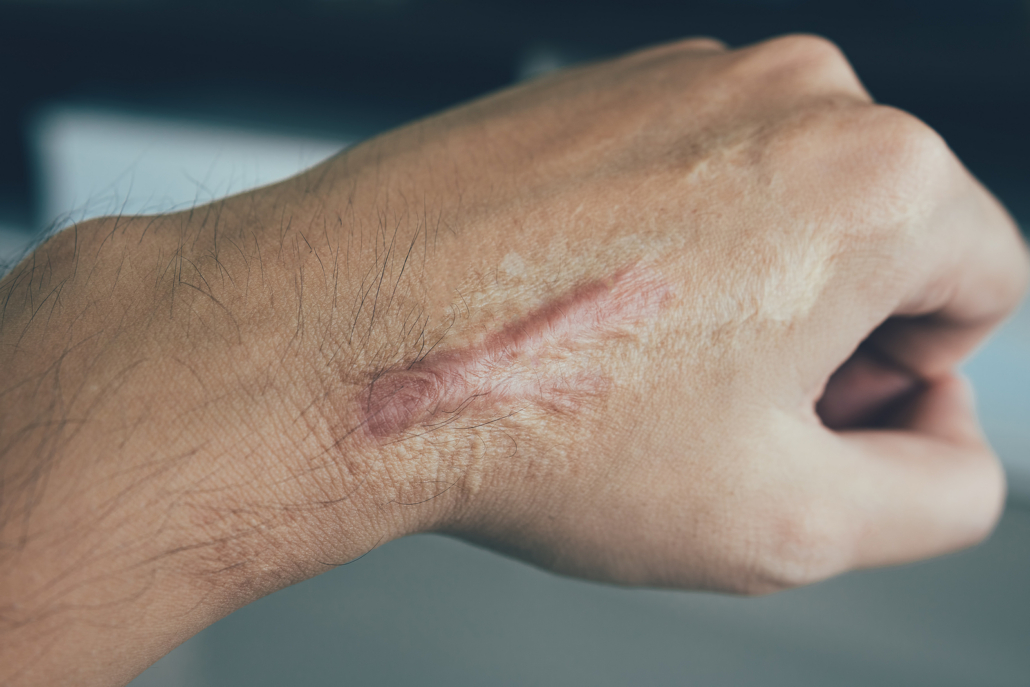
Many people think that radiotherapy is useful only as a means of treating cancer. While it does have a vital role in this regard, it also has many other uses that can bring all kinds of benefits to patients. Our radiotherapy centre can provide these.
An example of this is in preventing the recurrence of keloids after surgery to remove them. Keloids are a type of skin growth that arises when the skin does not respond in a normal way to trauma, such as a bad burn or a severe wound.
Scar tissue is a normal feature of some injuries of this type, as well as surgery, but the body is only supposed to produce a limited amount of collagen, the substance that is secreted by skin cells called fibroblasts. This should normally generate new skin to heal the wound.
However, on some occasions, the fibroblasts produce an excessive reaction, with a result that far too much scar tissue is produced. The result is keloids.
What Are The Characteristics Of Keloids?
These are characterised in the following ways:
- They cover a larger area than the original wound
- They are characterised by an unsightly raised and lumpy appearance
- They can cause significant discomfort, including soreness and bleeding
This raises a couple of obvious questions. The first is how this problem is caused, while the second is what can be done about it. Radiotherapy provides part of the answer to the second question.
Among the factors believed to cause keloids are:
- Skin infections, leading to more inflammation
- A genetic predisposition
- Traumatic injuries
In each of these cases, it is believed that the production of extra collagen is stimulated, producing the excess response and leaving these unpleasant pieces of scar tissue. They can be removed by surgery, but they often grow back again.
How Can Radiotherapy Impact Keloids?
The exact mechanism by which this happens has not yet been established and is the subject of ongoing research, but studies have also been taking place into means of curbing the regrowth of keloids, including the use of radiotherapy.
A recent study published in BMC Surgery highlighted the effectiveness of radiotherapy when given in the aftermath of surgery to remove the keloids.
It found that the use of radiotherapy after surgery was much more effective than surgery alone for preventing the recurrence of keloids, especially among older patients.
This was true both for when radiotherapy was used alongside injected drugs designed to suppress the production of collagen, or on its own.
In the study, 121 patients who had undergone surgery to remove keloids were arranged into three groups:
- Group A had surgery followed by radiotherapy
- Group B had surgery followed by a combination of radiotherapy and drugs
- Group C only had the surgery
Of these, Group A had a 93.88 per cent success rate, as very few patients saw the keloids return. Group B was nearly as successful at 87.04 per cent, whereas only 55.56 per cent of Group C did not see the keloids recur.
This provided a very clear indication that, while surgery was central to keloid removal in all cases, radiotherapy played a major role in ensuring that the keloids did not come back.
How Does Radiotherapy Stop Collagen Production?
To establish why this is, it is important to consider what radiotherapy does to cells and how this can prevent unwanted occurrences such as keloids.
Some will be familiar with the mechanism by which radiotherapy works against cancer. Powerful blasts of radiation can damage the DNA of the cells, which makes it difficult for them to reproduce. This can break down such cells and shrink tumours.
Radiotherapy can be used in a slightly different way for keloids. This involves damaging the DNA of fibroblast cells, which reduces their capacity to produce collagen, therefore preventing them from producing excessive amounts of scar tissue.
It is important to note that the amount of radiation involved will not be anywhere close to that used to fight cancer cells, although in both cases, the ideal outcome is cell apoptosis, where the cell breaks down entirely and therefore cannot carry out its undesired function.
This means that while those receiving radiotherapy for cancer may suffer side effects such as hair loss, nausea, tiredness and sore skin, this will not be the experience of those who have radiotherapy to prevent keloids returning after surgery.
Many treatments have been tried to curb keloids, from laser therapy and silicone gels to the application of retinoic acid. But a growing body of research evidence strongly indicates that radiotherapy to curb the capacity of fibroblast cells to produce collagen is the most effective.
