Radiotherapy treatment is often thought of as synonymous with a cancer diagnosis.
However, the uses for the treatment are much broader and radiotherapy can, in fact, be used for selected benign conditions, as well, including certain musculoskeletal disorders.
Among the conditions that radiotherapy can be applied to is Ledderhose disease. Predominantly impacting middle-aged to elderly men of Northwestern European origin, its prevalence is approximately 1-1.75 cases in every 100,000 of the population worldwide.
What is Ledderhose disease?
Although often associated with Dupuytren’s disease, which affects the hands in a similar way, Ledderhose disease affects the structure of one or both feet.
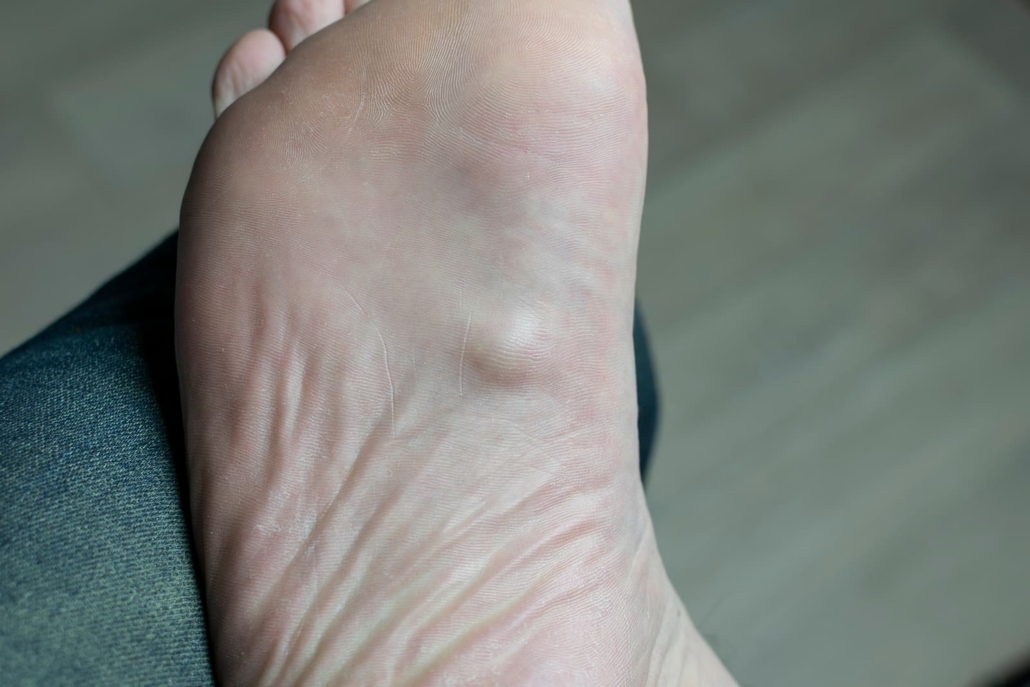
Ledderhose disease, also known as plantar fibromatosis, is a benign form of abnormal cell growth that manifests as hard lumps on the sole. They are made of fibroblasts and myofibroblasts, with dense collagen fibres that create a fibrous stroma.
The lumps, or nodules, are formed within the fascia, and it usually affects the plantar fascia or arch of the foot, although the lumps can grow on toes as well.
The onset of the condition is often gradual, with nodules potentially presenting as the initial symptom. Some patients experience little or no pain and symptoms can vary. Pain does not necessarily precede the appearance of nodules.
The plantar fascia is a tendon-like connective tissue along the sole. It is used in foot strikes when walking and running, so if that tissue is damaged, it can be very debilitating for the patient.
Although exact causes of Ledderhose disease are not confirmed, it is thought that a combination of genetic factors, age and injury to the foot can increase the likelihood of it occurring. Diabetes, smoking and alcohol misuse may also be factors.
What happens if Ledderhose disease is left untreated?
While the disease does have a variable course, with nodules potentially remaining stable for prolonged periods, lumps can also cause pain, tenderness and functional limitations.
Weight-bearing can be difficult, wearing certain shoes can become painful, and the quality of life can be severely impacted in some cases.
What treatments are there for Ledderhose disease?
Both conservative and surgical treatments are possible for Ledderhose disease.
A very conservative treatment for a mild case would potentially be a combination of non-steroidal anti-inflammatory medications, physiotherapy and stretching. This may be insufficient for some patients with persistent symptoms or progressive disease, however.
Surgical interventions to remove the lumps can leave scarring that makes it uncomfortable to walk. Recurrence following surgery is a recognised concern, but outcomes do vary.
Given that the plantar fascia is essential for shock absorption when running and walking, as well as supporting the arch of the foot and contributing to energy storage during movement, surgery does have the potential for complications, including wound-healing problems, painful scarring and recurrence.
Radiotherapy is a non-invasive way of potentially reducing pain and limiting disease progression, but note that complete elimination of nodules isn’t guaranteed.
How is radiotherapy used to treat Ledderhose disease?
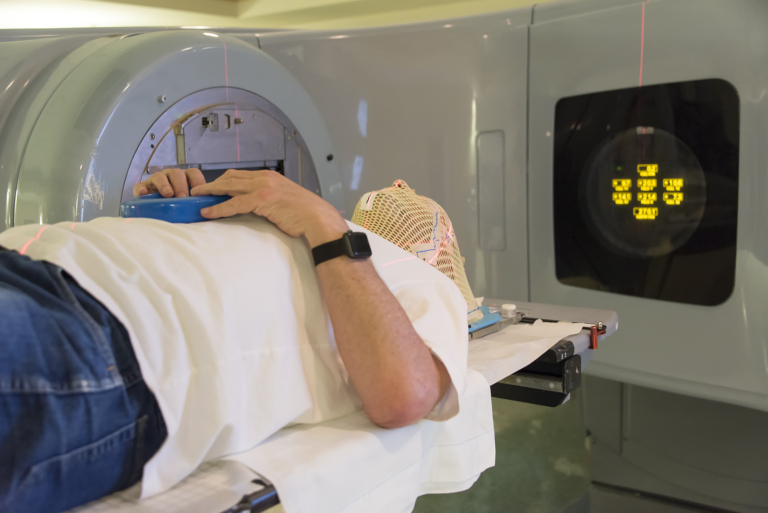
As an alternative to surgery, radiotherapy is a far less invasive treatment for plantar fibromatosis.
It works in a similar way to radiation treatments for cancer, using the same fundamental principle of ionising radiation. However, the treatment objectives, doses and protocols differ for benign conditions. Radiotherapy isn’t necessarily preferable to surgery for every patient.
During a course of treatment, radiation is targeted directly at the cells in the lumps. It’s thought this can drive changes in cellular proliferation and inflammatory signalling associated with fibrotic tissue formation.
Because it is so precisely targeted and delivered by specialist radiation oncologists, the treatment reduces exposure and damage to the healthy cells surrounding the lumps.
The treatment for Ledderhose disease is typically low-dose radiotherapy, with typical protocols set as daily treatment for five days, followed by a six to 12-week break, then a further five-day treatment plan.
What are the benefits of radiotherapy treatment for Ledderhose disease?
Non-invasive
Radiotherapy treatments for Ledderhose disease are non-invasive, which means there is less risk of post-operative infections, reactions to anaesthetics or damage to the plantar fascia. It is a relatively quick procedure, with symptom relief developing over weeks or months.
Few side effects
Side effects are usually mild and located around the site of the treatment. Temporary side effects can include redness, itching or dry skin and texture changes to the nodules, as well as burning sensations and a temporary increase in pain.
Side effects do vary between individuals and longer-term tissue changes are also possible.
No scarring
Unlike having surgery to remove the lumps, radiotherapy is non-invasive and works by shrinking them. There is no guarantee that nodules will shrink, however, and time will still be required in order for symptoms to improve.