
Depuytren’s Disease: What It Is And How You Can Treat It
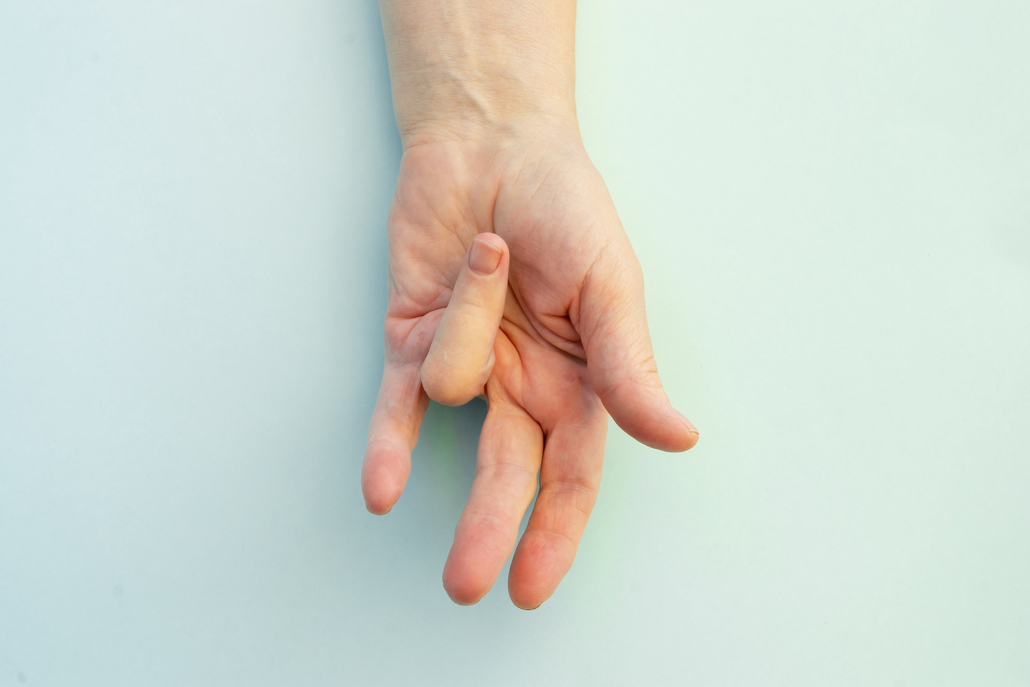
Depuytren’s Disease is not a widely known condition, but for sufferers, it can be very uncomfortable and have a big impact on their daily life.
Therefore, it is important to find a treatment that is effective and long-lasting, so they can function as normal and go about their hobbies and chores as they previously would have.
To find out more about Depuytren’s Disease and how it can be treated at our radiotherapy centre in Austria, read on.
What is Depuytren’s Disease?
Depuytren’s Disease, which is sometimes known as Depuytren’s Contracture, is when a finger is bent towards the palm of the hand involuntarily.
This condition affects the palmar fascia in the hand, which is a fibrous layer of tissue above the nerves, tendons, blood vessels and bones in the palm and fingers, but below the skin.
The collagen in the fascia thickens over time until it turns into nodules that force one or more fingers forward towards the palm.
While the condition is benign, it worsens over time, and can make it very difficult, or even impossible, to straighten the digits. Therefore, sufferers might find it difficult to perform normal tasks with their hands, from holding a cup to turning a key.
What are the first signs of Depuytren’s Disease?
It usually affects the fourth and fifth fingers the most, and is typically first detected when nodules start to form in the palm of the hand. Sometimes, deep dents known as pitting might also be spotted as the tissue pulls and becomes tightened.
This can make it look as though tendons are affected, but these are simply cords that have developed due to the build-up of collagen.
Once the thick cords have formed, this results in fingers being pulled in towards the palm permanently.
This progression could take a few years, often going undetected or untreated until it inhibits daily activities.
However, progression can be highly variable, with some patients developing contracture shortly after their first symptoms.
In the majority of cases, it affects both hands, making it challenging for those affected to have full mobility in their digits.
Though it is usually painless, it is important to seek treatment when it becomes difficult to straighten the fingers. This will enable patients to continue being able to do everyday tasks, such as cooking and dressing themselves, so they can maintain a level of independence.
What causes Depuytren’s Contracture?
The exact cause of Depuytren’s Contracture is unknown, though it is thought to be hereditary.
Therefore, if there is a family history of the condition, this increases the risk of developing it yourself. Those with diabetes, of Northern European ancestry, are male, take medication for seizures, and who are middle aged are also more likely to get Depuytren’s Disease.
It could also be linked to lifestyle choices, such as:
- Smoking
- Alcohol consumption
- A poor diet
Men typically experience progression of the disease more rapidly than women, as well as those under the age of 50.
How to get a diagnosis
Before a diagnosis of Depuytren’s Disease can be given, a doctor will go through the patient’s medical notes and their family history, and discuss their symptoms.
They will then conduct a physical examination, checking the fingers and hand to test the feeling there. They will feel for the nodules and cords and record their location, as further examinations will ascertain whether these are growing.
Doctors will also measure the range of motion and they might take photographs during a ‘tabletop test’, so they can easily see changes in the hand’s rigidity over time. This involves the patient trying to lie their hand flat on a surface to check how far their digits can bend.
They can use this data throughout the treatment process to see how much impact it is having or if the contracture is worsening.
What treatment options are available?
While there is no permanent cure, several treatments can effectively manage symptoms and slow progression, improving functionality of their hands.
The best course of action will depend on the age and health of the patient; how serious the contracture is; previous experience with medicines; and their wishes.
Options for treatment include:
– Steroid injections
People with early stages of the condition can have steroids injected into the affected area. The main aim of these is to reduce the inflammation and ease the pain.
Therefore, they simply help the patient manage their uncomfortable symptoms until the steroid wears off and needs to be topped up.
– Collagenase injections
Another option is to have collagenase injections, which helps to break down the collagen in the cords and nodules without causing damage to the collagen in other areas of the hand.
Typically, the injection takes a couple of days to start working. After this point, the doctor will manipulate the affected fingers to help the cord to break down, improving the hand’s mobility and slowing down the progression of the disease.
– Needle aponeurotomy
Some patients opt for needle aponeurotomy, which is a simple procedure that can be performed quickly and easily. It simply involves piercing the cord with a small needle and moving it around until it ruptures.
The advantages of this procedure are it has a quick recovery time, patients can leave the hospital the same day and it does not involve surgery.
While this helps to improve finger motion, it is not a long-term solution as recurrence will occur.
– Radiation therapy
A progressive treatment that seems to have more long-lasting results than injections and needles is radiation therapy.
This involves passing X-rays through the nodules, which softens the tissue. If administered at the early stages of the disease, this can prevent contracture occurring.
Otherwise, it could improve movement and flexibility of the digits by breaking down the nodules.
Due to being non-invasive, this treatment is growing in popularity wherever it is offered. However, availability of radiation therapy for Depuytren’s Disease is limited, and many patients have to travel abroad, such as to Austria, for this procedure.
– Surgery
The alternative is surgery, otherwise known as fasiectomy. This involves making an incision along the palm and finger under anaesthetic and dividing the cord to reduce the contracture and surgically straightening the finger.
Partial palmar fasciectomy is similar, but zig-zag incisions are made to the hand to break up the cord more for greater results.
In both cases, there are risks involved, including bleeding, numbness, infection, a long recovery time lasting several weeks, and the need for physical therapy to increase motion in the hand.